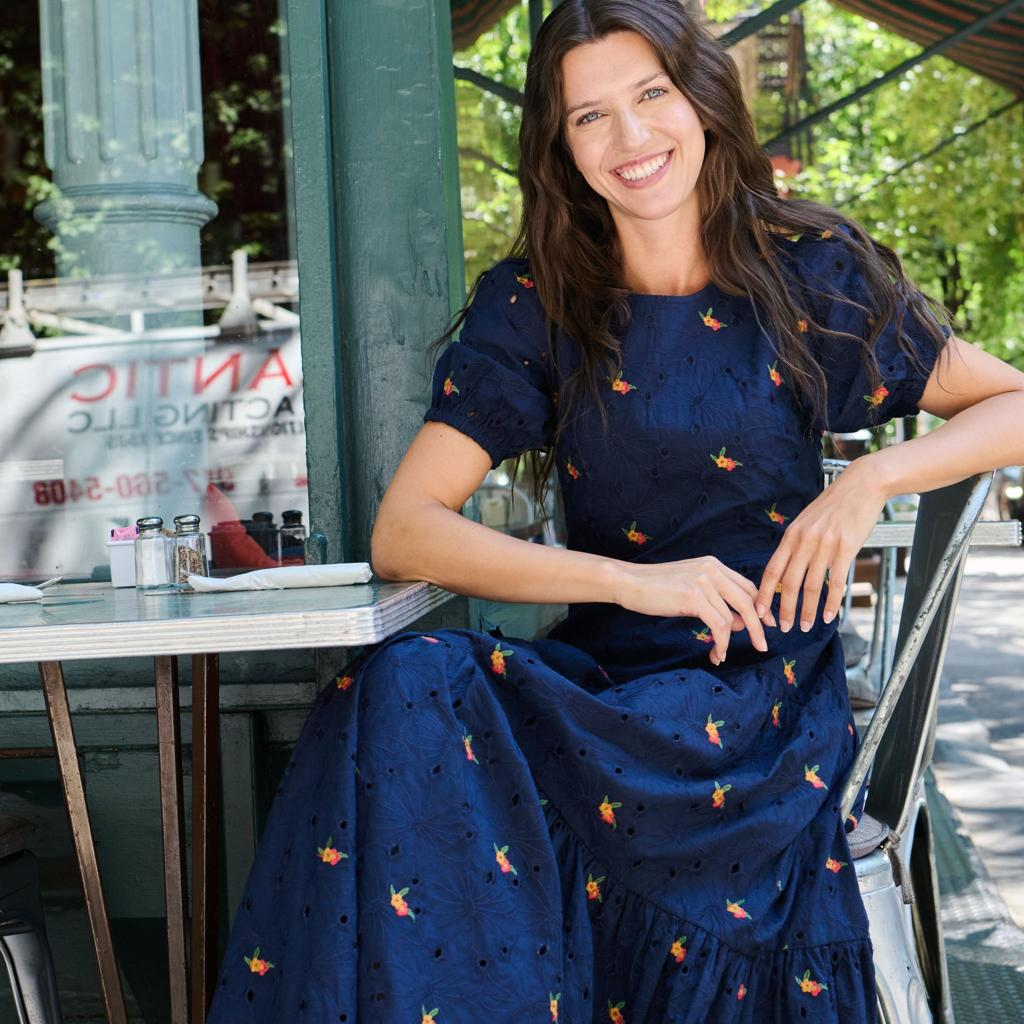
The door to the little country diner opens. A dark-haired woman in a modest blue dress steps inside, carrying a worn leather Bible and looking for an empty table.
Daniel Brown notices the woman before he notices the Bible. Then he sees the book tucked against her side and wonders whether she has mistaken the diner for somewhere else. It is Thursday morning, the breakfast crowd is still hanging on, and the nearest church is two streets over.
She looks toward the occupied booths, then at the counter. Every stool is taken. Daniel has a booth to himself, a cooling cup of coffee, and a parts order that won’t be ready for another forty minutes.
“You’re welcome to sit here,” he says. “Provided you don’t mind the company.”
She turns toward him, and he finds himself sitting a little straighter. Her eyes move from his face to the empty seat across from him.
“That depends. Is the company usually a problem?”
“I’ve never filed a complaint.”
“Well, that’s reassuring.” She smiles and slides into the booth. “Rebecca Rice.”
“Daniel Brown.” He moves the sugar dispenser out of her way. “You picked a busy morning.”
“My internet went down in the middle of uploading photographs. I thought breakfast might improve my attitude.” She sets the Bible beside her purse. “The internet company couldn’t.”
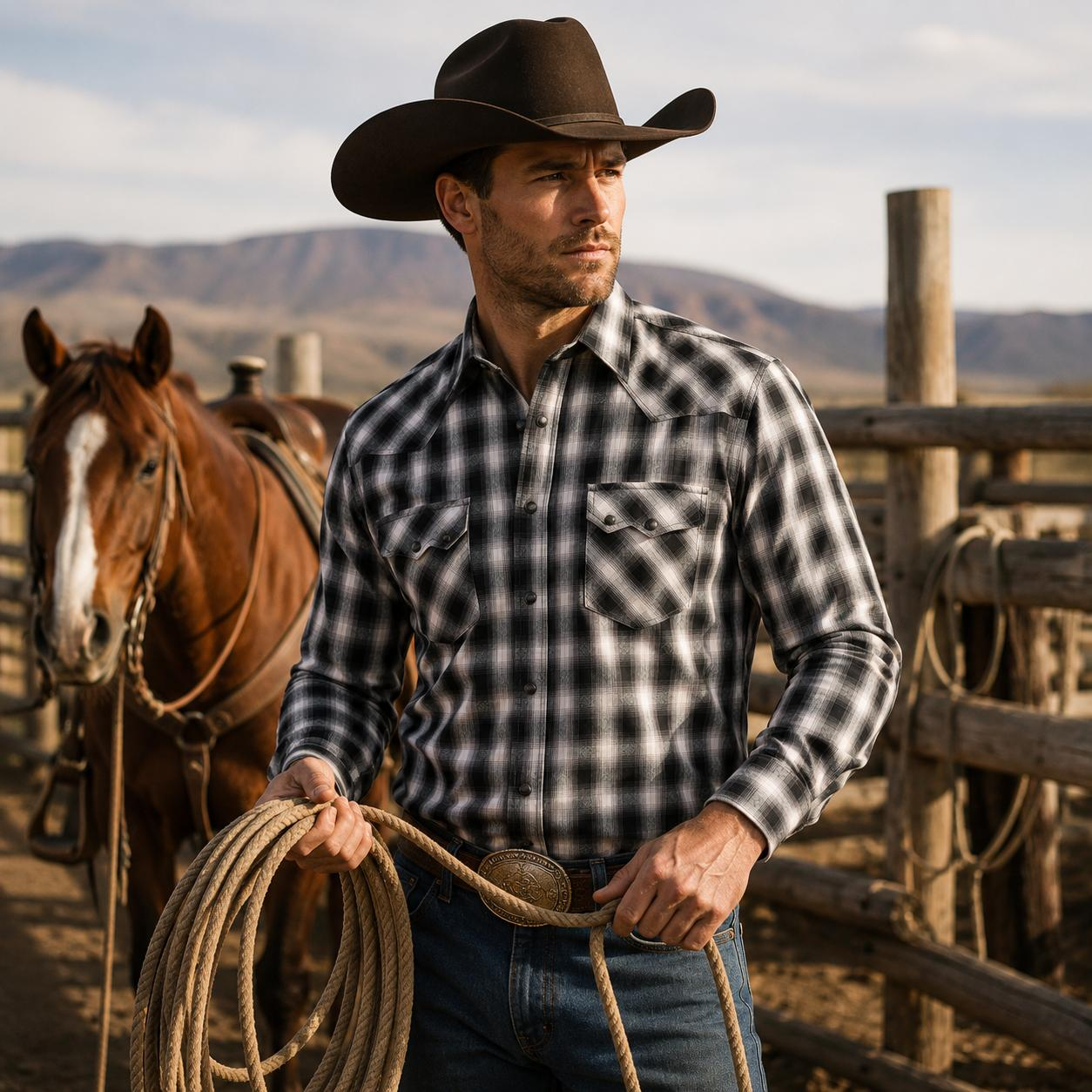
He laughs. He had expected someone carrying a Bible that worn to be a little more solemn. Across the table, Rebecca notices the laugh soften his face. He has the weathered look of a man who spends his days outdoors, though she doubts he is much past thirty. His hat rests beside him on the seat, and there is a pale line across his forehead where the sun hasn’t reached.
The waitress arrives with a coffee pot and a look of interest Rebecca hopes she is imagining. Rebecca orders eggs and toast. Daniel declines another breakfast, explaining that a man has to stop somewhere.
“Apparently coffee doesn’t count,” Rebecca says, watching him hold out his cup.
“Coffee helps a man decide where to stop.”
She laughs despite herself. She has spent three months introducing herself to strangers, explaining her prices, and wondering whether opening a photography business in a small Wyoming town was a sensible decision. It feels good to sit across from someone who isn’t asking whether she can make a family portrait cheaper if they supply their own camera.
“You’re the photographer in the old insurance office,” Daniel says.
“That’s me. The sign finally went up last week.”
“I saw it. Didn’t know whether you photographed people or scenery.”
“Mostly people. Families, weddings, senior pictures. Some business work.”
“How are you with horses?”
“That depends on whether I’m photographing them or riding them.”
“Photographing.”
“Much more confident.”
Daniel explains that he works the family ranch outside town. They have several young horses to sell, and the pictures he took on his phone make every one of them look as though something is wrong with it.
“Is something wrong with them?” she asks.
“Only their photographer.”
He brings up a picture and hands her the phone. Rebecca studies a sorrel gelding whose head appears much larger than the rest of him.
“You’ve managed to give him the proportions of a doorstop.”
“He’s better looking in person.”
“I should hope so.”
They arrange for her to come out the following Tuesday, weather permitting. She tells him she’ll send a written estimate first, and he nods without trying to bargain. That small courtesy pleases her more than she expects.
When her breakfast arrives, Rebecca bows her head. Daniel reaches for his coffee, then stops with his hand resting against the cup. Her prayer is quiet and brief. She doesn’t look around afterward to see who noticed.
“That explains the Bible,” he says.
“What does?”
“You being a church person.”
“I’m a Christian.” She says it easily, then glances at the book. “I was reading before I left the studio. I brought it along.”
“You always carry it?”
“Not always. Do you always carry that rope in your pickup?”
He looks out the window at the coil visible behind the seat. “Usually.”
“Then I suppose we both like having something useful close by.”
He smiles, but his eyes leave hers. Rebecca notices and lets the conversation return to the horses.
By the time they stand to leave, Daniel’s parts are ready and Rebecca’s breakfast has done what the internet company could not. At the register, he offers to pay for hers.
“Thank you, but I’ve got it.”
“It wouldn’t hurt anything.”
“Neither will letting me buy my own eggs.” Her smile takes the sting out of it. “I’ll see you Tuesday, Daniel.”
He watches her walk toward the little storefront farther down the street, then remembers he has come to town for a water pump.
At her studio door, Rebecca catches her reflection in the glass. She is still smiling. She reaches for her key and tells herself that a pleasant breakfast is simply a pleasant breakfast.
That evening, when she prays about the business and the work ahead, she remembers the way Daniel’s expression changed at the table.
“Lord, I don’t know what’s behind that,” she says. “But You do. Help me be careful with what I say to him.”
Tuesday brings a clear sky and enough wind to make Rebecca question her choice of hairstyle. By the time she pulls into the ranch yard, she has given up and tied her hair back. Daniel meets her near the barn, wearing the same easy expression she remembers from the diner.
“You found us.”
“Your directions were good. Though ‘turn after the crooked fence post’ covers quite a bit of Wyoming.”
“Ours leans farther.”
She gets her camera bag from the car while he opens a gate. Beyond him, the land rolls toward a low ridge, and the grass moves in long waves beneath the wind. The ranch house stands behind a row of cottonwoods. A blue enamel cup sits upside down on a porch rail, and a pair of muddy boots waits beside the door.
Rebecca likes the place immediately. It looks lived in, worked on, and cared for.
The first horse doesn’t share her interest in the morning’s work. He keeps swinging his hindquarters away from the camera. Daniel moves him back without raising his voice, then waits while the gelding settles.
“He doesn’t like that strap moving,” he says, pointing to her camera bag.
“I’m sorry. I didn’t think.” She puts the bag outside the fence. “Better?”
“We’ll ask him.”
Daniel lays a hand against the horse’s neck, speaking too softly for her to catch the words. The gelding lowers his head. Rebecca raises the camera, then pauses a moment before looking through it. There is something appealing about watching a capable man choose patience when force would be easier.
“Something wrong?” Daniel asks.
She puts the camera to her eye. “No. Hold him right there.”
They work through four horses, with Daniel following her directions and occasionally questioning whether she intends to photograph him into the ground.
“A little farther back,” she says.
“You said that a little farther back.”
“And you were so good at it.”
He grins and moves.
Later, in the barn doorway, she shows him several pictures on the camera screen. He leans close enough to see, keeping one hand on the door frame above her shoulder. Rebecca becomes uncomfortably aware of him beside her and shifts the camera so he can hold it himself.
Daniel notices the movement. He steps back, wondering whether he has crowded her.
“Those look like my horses,” he says. “Mine looked like evidence in a livestock complaint.”
“I’ll put that on my business cards.”
He wants to ask her to stay for lunch. The words are almost out when she checks the time and mentions an afternoon appointment. Instead, he carries her heavier bag to the car.
“I appreciate the work,” he says.
“You haven’t seen the bill yet.”
“I saw the estimate.”
“You’d be surprised how often those are different things to people.”
He opens her car door and steps aside. “Let me know when they’re ready.”
On the drive back, Rebecca thinks about his hand resting quietly on the gelding’s neck. She has met handsome men before. Some had made certain she knew they were handsome. Daniel seems much more concerned about whether his horses look sound.
That makes him harder to dismiss.
Over the next three weeks, Daniel discovers that town requires more trips than he remembers. He needs feed, then bolts, then a replacement fitting that could probably wait until Friday but doesn’t. Twice he sees Rebecca through the studio window and keeps walking. The third time, she sees him first and waves him inside.
“I was beginning to think you were inspecting the sidewalk,” she says.
“Somebody ought to.”
She is finishing an order and asks if he can give her five minutes. He stays for twenty, watching her choose between two nearly identical portraits of a little girl.
“That one,” he says.
“Why?”
“She looks like she’s about to do something she’s been told not to.”
Rebecca studies it, then laughs. “Her mother said that’s her usual expression.”
He learns that Rebecca takes her coffee with milk, forgets it when she is working, and dislikes being told that owning a good camera must make her job easy. She learns that he checks the weather before checking his messages, remembers what people tell him, and will argue cheerfully about almost anything until the subject turns to God.
Then he becomes polite. She begins to dislike that politeness more than an argument.
One afternoon, he finds her standing on a short ladder, trying to straighten a framed photograph above a cabinet.
“It’s still crooked,” he says.
“I know.”
“Other way.”
“Daniel, if you say ‘other way’ one more time, you can hang it yourself.”
“That was what I was working toward.”
She comes down and lets him finish. While she puts the ladder away, he notices a smaller photograph leaning against the wall behind the counter. Rebecca stands beneath studio lights in an elegant green dress, her hair arranged over one shoulder. He looks from the picture to her.
“That’s you.”
“It is.”
“You used to do this professionally? The other side of the camera?”
“For a few years.” She takes the frame and wipes a thumb across the dusty glass. “I found that while I was unpacking. I still haven’t decided where to put it.”
He looks again. He can easily imagine her on the pages of a magazine. “Why’d you quit?”
“The work was changing. At least, the work they wanted me to do.”
He waits. Rebecca sets the photograph on the counter, considering how much to tell him. She doesn’t want to make an ordinary conversation into a speech about her principles. But Daniel has asked an honest question.
“There was a national campaign,” she says. “The biggest offer I’d ever had. When I saw what they expected, I told my agent I wouldn’t do it.”
“What did they expect?”
“Very little clothing. Poses I wasn’t comfortable with. They were selling something I didn’t want to help sell.”
Daniel nods. “So you took another job.”
“Eventually. Smaller ones. But saying no to that one changed things with the agency. It helped me decide what I wanted to do next.”
“Must’ve paid pretty well.”
“Two hundred and fifty thousand dollars.”
He looks at her, waiting for the smile that will tell him she is joking. It doesn’t come.
“For the campaign?”
“Yes.”
“And you turned it down?”
“Yes.”
Daniel takes off his hat, then puts it back on. He thinks of the equipment he keeps repairing, the winter feed bills, the section of roof on the barn that needs replacing.
“Rebecca, that’s a house. That’s money put away for years.”
“I know what it is.”
“Over some pictures?”
Her expression changes, and he wishes he had chosen different words.
“I would have been the one in those pictures.”
“I didn’t mean it that way.” He rubs the back of his neck. “I’m trying to understand.”
“I wanted the money, Daniel. I thought about it. I thought about what it could do for me.” She rests her hand on the edge of the counter. “But I couldn’t pray for God to guide my life and then tell Him this part was none of His business.”
He glances toward the Bible on her desk. “How do you know that’s what He wanted?”
“Because what I was being asked to do went against what He teaches. It wasn’t a mystery I needed a special sign to solve.”
He is quiet for a moment. “And you’ve never wished you’d taken it?”
“I’ve wished the business account had more money in it.” She gives him a small smile. “That isn’t the same thing.”
He can’t find an answer. He respects that she stood by something. He just cannot understand why that something should have cost her so much.
After he leaves, Rebecca stays behind the counter. She knows that look. Her agent had worn it, too, though Daniel had listened longer.
She looks toward the door, wishing his opinion didn’t matter quite as much as it does. Then she pulls out the desk chair and sits down.
“Lord, help him understand who You are,” she prays. After a moment, she adds, “And help me remember who You are. I’m starting to care about him.”
At the ranch, Daniel stops beside the barn before going into the house. The roof catches his eye, and the amount comes back to him. A quarter of a million dollars. She had known exactly what she was giving up, and she had done it anyway.
He looks at the light over the kitchen window. Once, at eighteen, he had sat beneath that light and prayed until morning, certain that God would listen if he could only find the right words. He pushes the memory away before it goes any farther.
Rebecca trusts God enough to put her future in His hands. Daniel can’t understand how she does it. But as he crosses the yard, he knows he will be going back to ask.